Jung Ji-hyung’s Like a Season (계절과 같은, 2007) opens with a wonderfully ordinary scene. Two students are riding an old bicycle along a country road, with several pieces of freshly laundered clothing hanging from it. The boy pedals while the girl sits behind him, laughing as they make their way uphill. A gentle piano-and-violin melody plays over the sequence, giving the whole afternoon a distinctly nostalgic atmosphere.
The opening recalls the mood of coming-of-age films from the 1990s, with their unremarkable streets, youthful awkwardness, and everyday moments that somehow become memorable. For an entirely personal and rather unrelated musical association, it also brought Saint Etienne’s Spring to mind. The film is clearly set in summer, judging by the cicadas, melting ice cream, and oppressive heat later on, so the comparison has little to do with the actual season. It is simply the sort of music that seems to belong to the same vaguely nostalgic mood.
Produced through Konkuk University’s Department of Film Arts graduation film workshop, Like a Season runs for 33 minutes and 17 seconds. It stars Uhm Tae-goo as In-seok, a young man whose affection for his longtime friend Joo-hee (Kang Jin-ah) has followed him from school into adulthood.
At first, their relationship appears uncomplicated. They laugh easily, seem comfortable around each other, and have evidently accumulated years of shared experiences. But as Jung moves between their school days and adult lives, the nature of that familiarity becomes less certain. In-seok has developed romantic feelings that he struggles to express, while Joo-hee continues treating him as someone she can comfortably depend on.
The film handles their relationship with an occasionally peculiar mixture of sentimentality, and romantic frustration. Its characters are not always particularly articulate, and some of their decisions are genuinely exasperating. Yet those awkward exchanges are also part of its appeal, especially when placed alongside the film’s attention to small gestures, familiar locations, and objects that return with different meanings.
A Summer Seen Through Memory
The opening bicycle ride deserves attention for the way it introduces In-seok and Joo-hee before explaining anything about their relationship.
The camera begins by following the road, gradually revealing the bicycle and its passengers. In-seok is working considerably harder than Joo-hee, who seems perfectly content to enjoy the ride behind him. They continue smiling even as the road becomes steeper, and their journey eventually includes a near mishap on a downhill path that sends some of the laundry tumbling.
Their companionship looks easy and affectionate. The bicycle is old, the arrangement is impractical, and neither appears especially concerned about it. They eventually stop to walk across a bridge overlooking a river, taking their time before continuing.
Then the music stops.
The screen turns black, and the film’s title appears in the lower-right corner. What follows is a conversation between In-seok and Joo-hee, heard without any accompanying image. He questions something she once suggested might happen between them. She seems confused by what he means, and he cannot explain himself.
It is an abrupt interruption after such a cheerful introduction. The film has barely begun, yet Jung has already introduced a discrepancy between the relationship we have just watched and the one In-seok apparently believes exists.
The narrative subsequently moves through different periods of their lives without always identifying the transitions immediately. Their adult circumstances are interrupted by memories of school, familiar roads, and encounters that seem to have remained important to In-seok.
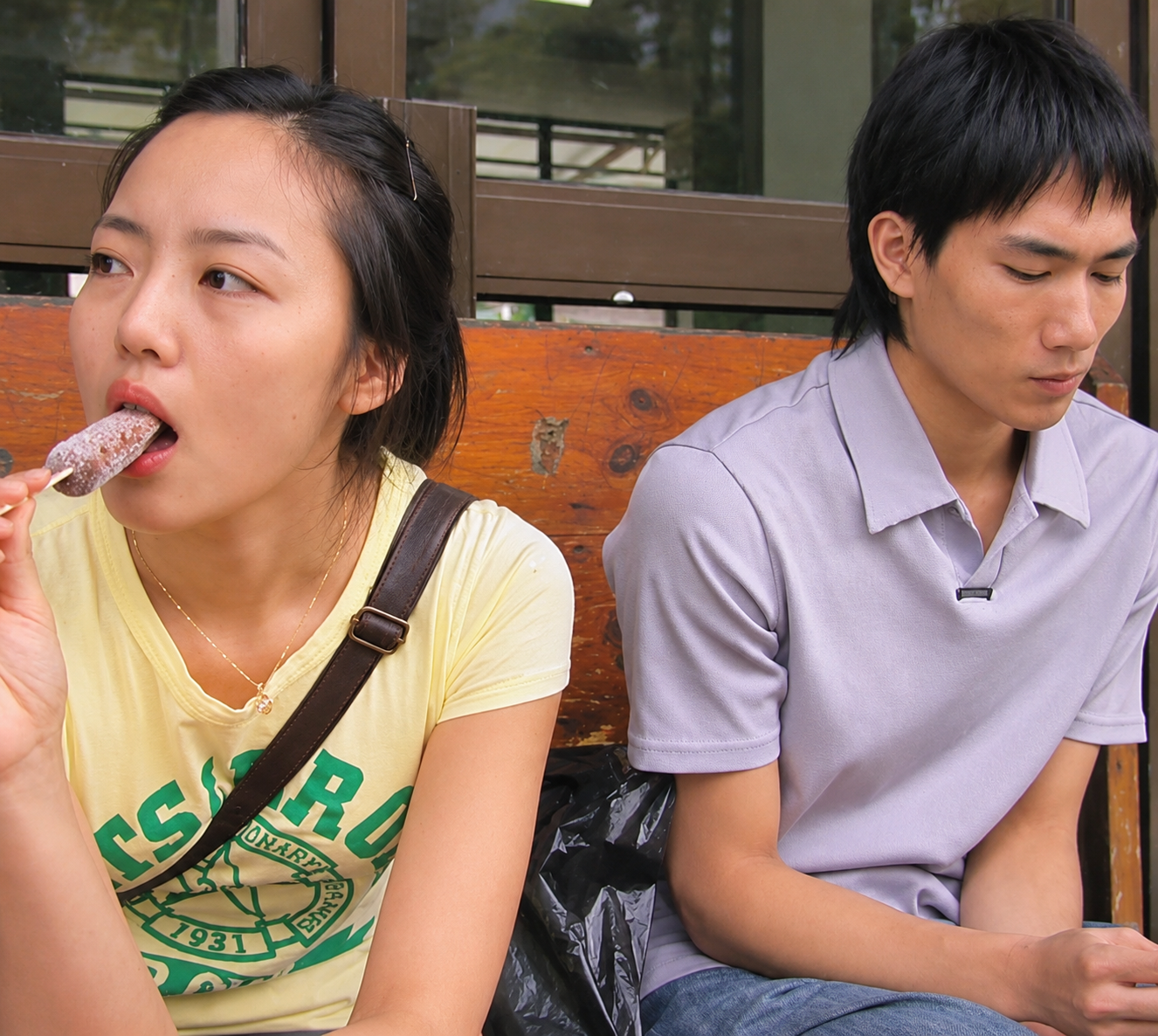
One particularly charming passage takes place outside Jeongseon Passenger Terminal (정선여객터미널), with Jeongseonjang Inn (정선장여관) visible nearby. In-seok and Joo-hee sit together eating chocolate-covered ice creams while cicadas fill the background.
The details of their appearance are almost as revealing as the conversation. Joo-hee wears a yellow shirt and has her hair tied back, looking relaxed and confident. In-seok, thin and rather nerdy-looking in a polo shirt, sits with one hand awkwardly tucked between his thighs. He keeps glancing at her, apparently unable to stop himself.
Joo-hee eventually produces a bright yellow envelope from her bag. She tells him that something she read reminded her of him and asks him to open it at home.
In-seok can barely contain his excitement. He almost opens it immediately, prompting Joo-hee to repeat her request. Eventually, he presses the envelope against his chest, smiling as though he has just received something extraordinary.
The combination of his expression, the yellow envelope, and Joo-hee’s matching shirt makes the exchange particularly endearing. He even jokingly compares the envelope to her, although his explanation is hardly elaborate.
When the bus arrives, In-seok helps Joo-hee with her belongings and sees her off. The camera then returns to the bench, where the two unfinished ice creams have been left behind. One is slowly melting, its chocolate coating dripping onto the surface below.
It is a memorable shot precisely because the camera stays with something so mundane. Their conversation has ended, the bus has departed, and the remains of their afternoon are melting in the summer heat.
The image also fits the way the film treats time. In-seok seems inclined to preserve certain encounters as something precious, while the physical world continues changing regardless of how much meaning he attaches to them.
Jung returns to this contrast throughout the film. The past is recalled through moments of warmth and embarrassment, while adulthood brings a less flattering understanding of what those memories may have meant.
The Boy Who Is Always Available
In-seok’s adult life is largely spent at Baekyang Cleaning (백양 크리닝), the laundry and garment-care business he operates with his uncle (Kim Jae-rok).
The setting is introduced through the work itself. The camera moves across colorful spools of thread, the rotating wheel of a sewing machine, and the foot operating its pedal before revealing In-seok at work. There is an almost documentary-like interest in the equipment and repetitive physical movements.
It is also an appropriate workplace for someone whose affection is frequently expressed through practical assistance.
In-seok is the sort of person who carries belongings, delivers things, runs errands, and responds whenever Joo-hee calls. He rarely approaches their friendship with anything resembling a clear romantic proposal. Instead, he makes himself useful and seems satisfied, at least temporarily, whenever his efforts give him another opportunity to see her.
His reaction to Joo-hee’s unexpected visit to the laundry shop is especially amusing.
The moment he hears that she has arrived, his expression brightens. He hurries toward her, adjusting his clothes and struggling to decide what to do with his hands. Joo-hee, meanwhile, has come with a practical request: she needs a stain removed from a garment by the following day.
His uncle examines it and doubts that anything can be done. The material looks expensive, the stain is difficult, and there is already plenty of work waiting.
In-seok volunteers anyway.
The exchange is funny because they seem to be experiencing entirely different situations. Joo-hee has a laundry problem. In-seok is thrilled that she has visited him.
He eventually asks whether they might go out to eat, and her agreement leaves him visibly delighted. Even after she begins leaving, he calls her name again, only to offer another awkward goodbye.
It is an almost ridiculous amount of excitement over an ordinary visit. Uhm Tae-goo makes it work through the sheer transparency of In-seok’s expressions.
The relationship becomes more difficult to watch when Joo-hee seeks him out following another breakup.
In a room containing musical instruments, she sits by the window and complains about her former boyfriend. In-seok listens, apparently searching for an appropriate response while also trying to suggest that he might be different from the men who have disappointed her.
His attempts barely interrupt her train of thought.
She has come to talk about someone else. He is trying to make the conversation about the possibility of himself.
At one point, he even encourages Joo-hee to answer her boyfriend’s repeated calls. It is almost unfortunate behavior for someone hoping to become her romantic partner, but entirely consistent with the role he has established in her life.
Joo-hee knows that In-seok will listen. He has given her every reason to believe so.
Her behavior can be frustrating, particularly when she appears unaware of how much he hopes for something more. Yet the film does not establish that she has deliberately encouraged a romantic relationship. Much of their difficulty comes from the difference between what Joo-hee is comfortable receiving and what In-seok privately expects his attentiveness might eventually achieve.
In-seok also contributes to the confusion. His reluctance to confess allows him to preserve the possibility of romance, but it leaves Joo-hee without a clear understanding of what he wants.
Their familiarity has become both the foundation of his affection and the obstacle to expressing it.
Romance, Rejection, and Some Very Awkward Moments
For a film concerned with unrequited affection, Like a Season has a surprising amount of humor, some of it so peculiar that it deserves mention on its own.
One of the strangest examples appears inside the laundry shop, where a television documentary shows two turtles mating. The narration discusses how a male animal reacts when a female refuses his advances.
The connection to In-seok’s romantic situation is hardly subtle. There is something amusing about watching him continue sewing while the television provides an oddly specific commentary on courtship and rejection.
A later radio broadcast offers another observation about the difficulty of achieving one’s dreams. It plays while In-seok and his uncle lie on bedding spread across the floor.
The uncle asks whether he is asleep.
In-seok answers yes.
It is a tiny exchange, but a good example of the film’s casual humor. His uncle then reminds him of an upcoming meeting with a kindergarten teacher, launching into an enthusiastic description of her desirable qualities.
The teacher is Mi-yeon (Yoo Soo-hwa), and their subsequent café meeting contains some of Tae-goo’s funniest moments in the film.
Mi-yeon is confident, expressive, and apparently quite comfortable taking the initiative. In-seok is almost the exact opposite. He arrives fanning himself with his shirt, sits down awkwardly, and struggles through the opening conversation.
When she asks about his preferences, he explains that he dislikes expensive cafés and does not understand why people pay so much for food and drinks that, to him, seem hardly worth the price.
It is a slightly peculiar thing to discuss on a first date, although Mi-yeon seems entertained rather than discouraged.
They eventually discover a shared liking for chicken, particularly marinated chicken. The detail sounds incidental at first, but it becomes relevant later.
The conversation takes an uncomfortable turn when In-seok asks whether men and women can maintain a purely platonic friendship. Mi-yeon makes it clear that she is not particularly interested in becoming merely another female friend.
In-seok’s reaction is noticeably less enthusiastic than hers. He seems to be considering what her answer might mean for his relationship with Joo-hee.
Then his silver flip phone rings.
His expression changes immediately when he sees the caller. Apparently hearing from Joo-hee, he suddenly has somewhere else to be.
Mi-yeon is not pleased about the interruption. She raises her voice to request water while he is still speaking on the phone, then moves closer and takes his phone to enter her number.
In-seok becomes increasingly flustered. He drinks directly from a glass despite the straw already in it, appears to pick up the wrong drink, and repeatedly attempts to excuse himself. Eventually, he has to move the table out of his way to leave.
Even after rushing toward the stairs, he briefly returns to wave goodbye.
The entire encounter is a rather entertaining demonstration of how badly In-seok handles situations in which someone is openly interested in him.
Mi-yeon is certainly forward, sometimes intrusively so, but her interest is unmistakable. She does not expect him to infer her intentions from years of favors and familiar conversations.
In-seok, however, is so occupied with Joo-hee that he can barely give Mi-yeon his full attention.
The contrast complicates his sympathetic position. He may be disappointed that Joo-hee does not recognize his feelings, yet he is similarly inattentive toward someone who is making an effort to know him.
His uncle adds another layer of comedy. When In-seok returns from the meeting, the older man immediately demands to know how it went, scolding him for his awkwardness and warning that he will never get married if he continues behaving that way.
In-seok is already preparing to leave again, of course.
His uncle is left calling after him, demanding that he phone and issuing increasingly theatrical complaints.
The humor gives the film a slightly unruly quality. Its romantic situations can be sentimental one moment and ridiculous the next. Not every transition is entirely smooth, but the awkwardness suits a character who rarely knows what to do with himself.
The Details That Change Their Meaning
Jung pays considerable attention to ordinary belongings, sometimes returning to them after the characters’ circumstances have changed.
The ring on Joo-hee’s left ring finger is among the more revealing examples.
During her visit to the laundry shop, the camera focuses on her hand before showing In-seok approaching from behind. He gently removes the ring, places it on the table, and embraces her, resting his chin against her shoulder.
For someone so hesitant in ordinary conversation, the intimacy is unexpected. He appears almost entirely comfortable holding her.
Yet the subsequent interaction raises the possibility that the embrace occurred in his imagination. In-seok apologizes for having been distracted by his thoughts, and the scene returns to their usual awkward exchange.
It is a plausible glimpse into a private fantasy. In-seok may be incapable of confessing his feelings directly, but he can imagine removing the object that visibly marks Joo-hee’s involvement with someone else.
The ring appears again later in the narrative, although its second appearance is defined by its absence.
During a rainy night, Joo-hee arrives at the laundry shop and looks through its glass frontage. She attempts to contact In-seok by phone. The camera focuses on her hand pressed against the window, revealing that the ring previously seen on her left ring finger is no longer there.
This is a significant visual change, particularly because the film has already drawn attention to the ring during In-seok’s possible fantasy.
Its absence suggests that something has changed in Joo-hee’s romantic circumstances. Given her earlier discussion of a breakup, the implication is understandable, although the film does not explicitly explain what happened to the ring.
The timing makes the detail even more intriguing. In-seok once imagined removing it himself; now Joo-hee appears without it, but he is upstairs with Mi-yeon.
There is room to wonder whether Joo-hee’s visit has anything to do with a change in her feelings toward him. Still, the film does not provide enough evidence to settle that question. Its decision to emphasize her bare ring finger is suggestive without being conclusive.
Another visual detail is considerably less romantic.
During the music-room conversation, Joo-hee looks toward In-seok’s shirt collar. The camera briefly reveals a dark line of accumulated dirt along its inner edge before returning to her face, where she appears uncomfortable.
It is almost unfortunate for In-seok, considering that he works in a laundry business. He spends his days caring for other people’s clothing while apparently neglecting the cleanliness of his own collar.
The shot becomes even more awkward because he is trying to present himself as someone who might be a better romantic partner than the men Joo-hee has dated.
Whether her reaction reflects actual distaste or simply momentary discomfort is uncertain. Either way, it gives the scene an unflattering little interruption.
The stained garment Joo-hee leaves with In-seok receives more sustained attention.
During a rainy evening, he sits at his sewing machine and examines the fabric, applying liquid from a small bottle near his equipment before carefully rubbing the stained area. Its purpose is not made entirely clear. The bottle resembles something associated with maintaining the sewing machine, although the film does not establish exactly what the liquid contains.
Later, In-seok uses scissors to cut into the affected section.
His movements appear careful and deliberate. Rather than treating the action as an outburst of anger, it seems reasonable to consider that he may be attempting another method of repair after ordinary cleaning has failed.
The film does not show enough of his process to establish the intended result. What is evident is that he continues working with the garment even after his relationship with Joo-hee becomes emotionally uncomfortable.
That persistence is consistent with the way In-seok has approached her throughout the story. He may struggle with his feelings, but helping Joo-hee has become a deeply familiar part of his behavior.
Other objects receive attention because they never fulfill their apparent purpose.
In a recollection from their school days, In-seok returns toward Joo-hee’s house carrying a small red lunch box. Before reaching her gate, he discovers her standing with another boy, who has a guitar slung over his shoulder.
The boy touches Joo-hee’s hair, compliments her, and eventually embraces her.
In-seok hides behind a wall, watching. Startled and visibly distressed, he drops the red box, then crouches to retrieve it.
The contents remain uncertain, but his intention to bring something to Joo-hee appears to have been abandoned.
The moment also offers a glimpse of the difference between In-seok and the boys Joo-hee seems romantically attracted to. The guitar-carrying boy appears considerably more confident, while another man seen walking with the adult Joo-hee is neatly dressed and composed.
In-seok, with his awkward posture, nervous gestures, and rather unfashionable appearance, hardly resembles either of them.
It is tempting to wonder whether Joo-hee simply has a preference for men who appear more confident or conventionally attractive. The film offers a few visual hints in that direction, although her actual reasons for regarding In-seok as a friend remain unknown.
The contrast is amusing, if a little unfortunate for him. He has spent years being considerate and dependable, while repeatedly watching other men occupy the romantic position he wants.
Even so, it would be unfair to suggest that his kindness should automatically entitle him to Joo-hee’s affection.
If anything, the film becomes more interesting when his disappointment is understood alongside the limitations of his own behavior.
The Rain, the Window, and an Unexpected Reversal
Rain becomes particularly prominent during the later part of the film, accompanying several developments that complicate In-seok’s relationships.
One of the most affecting encounters occurs when he runs to Joo-hee’s house carrying her stained garment.
He arrives breathless and visibly unsettled. Joo-hee comes outside with her red umbrella and appears surprised that he has made the journey simply to discuss her clothing.
She has almost forgotten about it.
For In-seok, however, the garment has remained a responsibility, as well as another reason to see her.
Their conversation gradually turns toward the nature of their relationship. Joo-hee suggests that she might have dated a man like him if they had not already been friends.
It is a painfully unfortunate thing to say to someone who has spent years hoping that their friendship might become something else.
In-seok asks whether they cannot be more than friends.
Joo-hee seems confused and insists that they are friends.
He reminds her of something she once said about making a relationship possible, prompting the conversation heard over the black screen near the beginning of the film.
The earlier dialogue finally has its context.
In-seok’s expression during this exchange is difficult to watch. He has evidently invested considerable meaning in their history, and Joo-hee’s response leaves him struggling to understand whether he has misread her entirely.
What hurts most is not an explicit declaration that she dislikes him. She appears to value him greatly. Yet the affection he has been receiving is not the kind he has wanted.
The scene also complicates the audience’s view of Joo-hee. Her words can sound inconsiderate, especially when delivered to someone who is visibly distressed. At the same time, the film does not make clear how fully she understands the extent of In-seok’s feelings.
The relationship has been sustained by conversations that repeatedly avoid the subject most important to him. When they finally approach it directly, neither seems equipped to resolve the misunderstanding.
Later, Mi-yeon arrives at the laundry shop carrying marinated chicken.
She remembered what In-seok said he liked during their awkward café meeting.
There is something rather sweet about the gesture, particularly after watching how inattentively he treated her earlier. She has taken the trouble to remember a small detail about him.
True to character, however, she wastes little time making herself comfortable. She looks around the shop, notices the upstairs living quarters, and begins heading toward them despite In-seok’s nervous objections.
Their interaction quickly becomes flirtatious.
Inside the upstairs room, Mi-yeon complains about the heat and removes her cardigan. In-seok becomes visibly conscious of her physical presence, particularly after she exposes more of her neck and shoulders.
The film then cuts back to the rainy exterior before eventually revealing the two together in bed.
Mi-yeon is asleep when In-seok wakes to his vibrating phone.
Joo-hee is calling.
Outside, Joo-hee stands in the rain, looking through the shop window and attempting to reach him. The earlier detail of her missing ring is shown during this sequence.
The arrangement is almost the reverse of what the audience has become accustomed to seeing.
In-seok has repeatedly interrupted his activities to answer Joo-hee’s calls, abandoning even his first meeting with Mi-yeon when she asked to see him. Now Joo-hee is the one seeking him out, while he hesitates over whether to answer.
The window creates a simple but effective division between them. Joo-hee remains outside, unaware of the circumstances upstairs, while In-seok is faced with a situation considerably more complicated than his earlier devotion to her.
It also provides one of the film’s strongest examples of visual storytelling. The telephone, the sleeping Mi-yeon, the rain, and Joo-hee’s hand against the glass communicate the awkwardness of the situation without requiring an extended conversation.
In-seok’s dilemma becomes a topic of discussion with his uncle afterward.
He awkwardly asks what a man should do if he has feelings for one woman but becomes involved with another. His uncle initially responds with broad, rather unhelpful advice about meeting women and leaving matters of love to timing.
Then In-seok reveals enough for his uncle to realize that he has slept with someone.
The older man’s reaction is immediate.
His curiosity turns into astonishment, followed by excited questioning about Mi-yeon. In-seok, characteristically unable to manage the conversation, leaves him demanding further explanations.
Even at this point, Jung finds room for comedy. The film has placed In-seok in a genuinely complicated emotional situation, but his inability to discuss it with his uncle is almost as amusing as his earlier difficulty speaking to either woman.
Uhm Tae-goo Before the Familiar Screen Persona
Watching Like a Season today is particularly interesting because of how different Tae-goo appears from the characters that later became associated with his career.
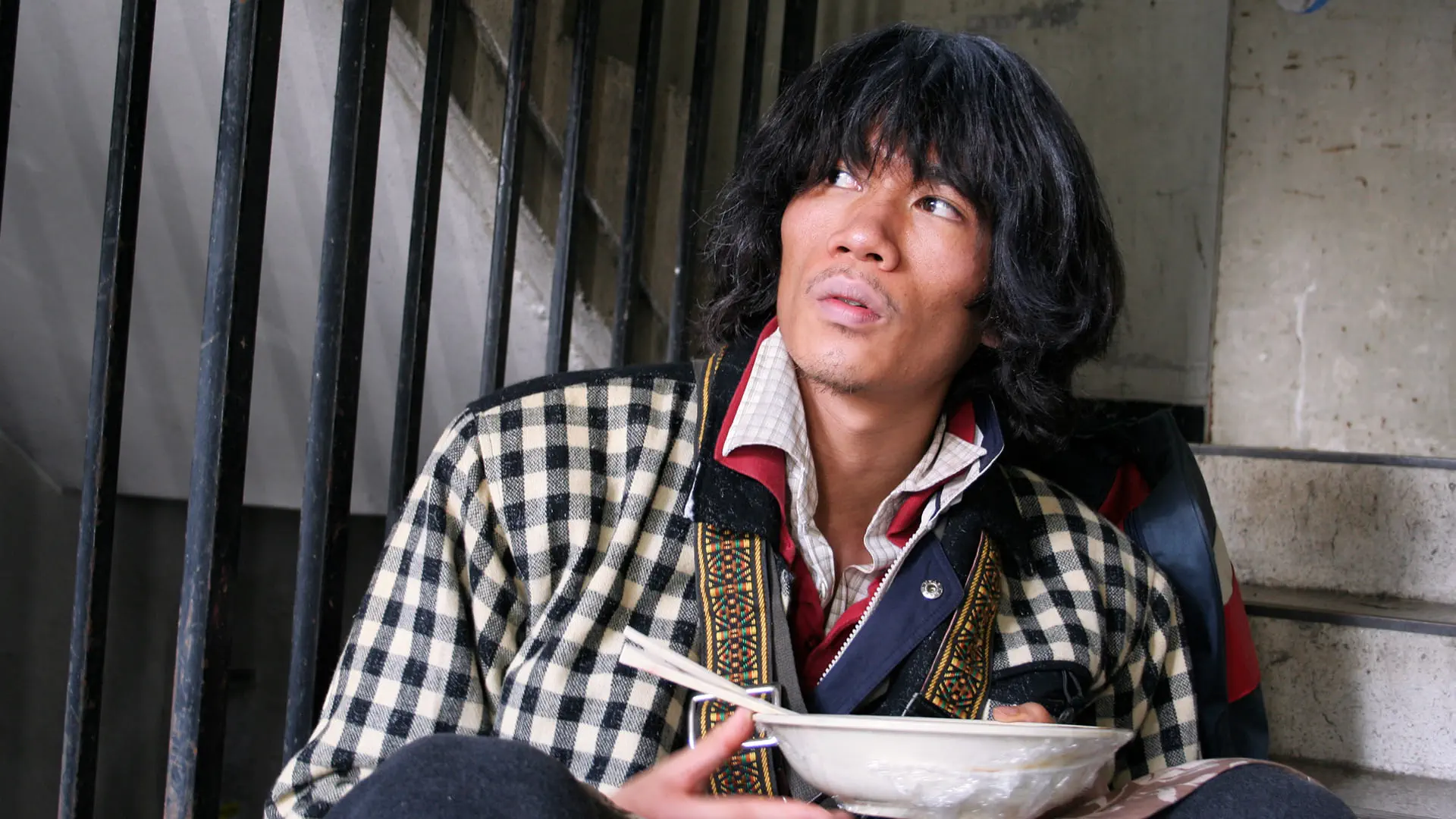
In-seok is thin, boyish, and almost constantly embarrassed. His hairstyle, clothing, and nervous expressions contribute to an appearance that is much closer to a socially awkward student than the more hardened figures he would eventually portray.
There is an appealing lack of composure in his performance.
He frequently adjusts the hem of his shirt, rubs his hands together, waves them when embarrassed, and smiles before deciding what to say. Sometimes he seems so pleased by Joo-hee’s attention that he can barely remain still.
His movements are particularly amusing during the laundry-shop visit and the café meeting with Mi-yeon. The former shows him reacting with excessive delight to an ordinary encounter, while the latter finds him increasingly overwhelmed by a woman who has no difficulty expressing her interest.
The gestures also bring to mind some of the nervous mannerisms Tae-goo has displayed during public appearances and interviews in later years. The resemblance is noticeable, although it should not be taken as evidence that In-seok reflects the actor’s private personality. What matters within the film is how effectively those movements communicate the character’s discomfort.
His acting becomes more affecting when that energy disappears.
During the school-day scene in which In-seok discovers Joo-hee with another boy, his distress is visible in the way he hides, drops the red box, and struggles to control his expression.
The confrontation outside Joo-hee’s house is even harder to watch. In-seok arrives full of urgency, only to find himself unable to respond when she reiterates that they are friends.
Tae-goo allows his face to register the disappointment before the character can put it into words. His eyes appear reddened, his speech becomes hesitant, and his usual nervous movements no longer carry the same playful quality.
These shifts give In-seok more dimension than his awkwardness alone might suggest.
He is capable of being considerate, frustrating, unintentionally funny, and emotionally evasive. His long attachment to Joo-hee makes him sympathetic, but his behavior toward Mi-yeon demonstrates that he is not always especially thoughtful when someone else’s feelings complicate his own.
That contradiction is useful to the performance. Tae-goo does not need to make In-seok consistently admirable for the audience to understand his disappointment.
As an early leading role, Like a Season offers a valuable opportunity to observe how he handles a character whose emotions are frequently exposed through physical behavior. His pauses, smiles, gestures, and changes in expression often communicate more than the dialogue itself.
Jung Ji-hyung’s Storytelling: Uneven, Playful, and Attentive to Detail
The film’s most distinctive directorial decision is its movement between past and present.
Rather than presenting In-seok and Joo-hee’s relationship chronologically, Jung introduces an affectionate memory, interrupts it with an unresolved argument, and gradually supplies the circumstances behind that conversation.
The school-day scenes become part of the adult narrative through places and objects that remain familiar: the bridge, the music room, the bicycle, and the clothing associated with In-seok’s work.
The transitions occasionally require some effort from the viewer. Certain memories appear without immediate explanation, and the chronology of individual encounters is not always obvious.
Yet the arrangement gives the audience an experience somewhat similar to In-seok’s own. His present circumstances seem continually interrupted by memories of Joo-hee, particularly those involving affection, misunderstanding, and missed opportunities.
The music room offers a good example.
While Joo-hee is occupied with a phone call, In-seok looks around the room. His gaze moves toward a guitar with damaged strings, then toward the trees outside. The film subsequently returns to an incident from their school years in the same setting.
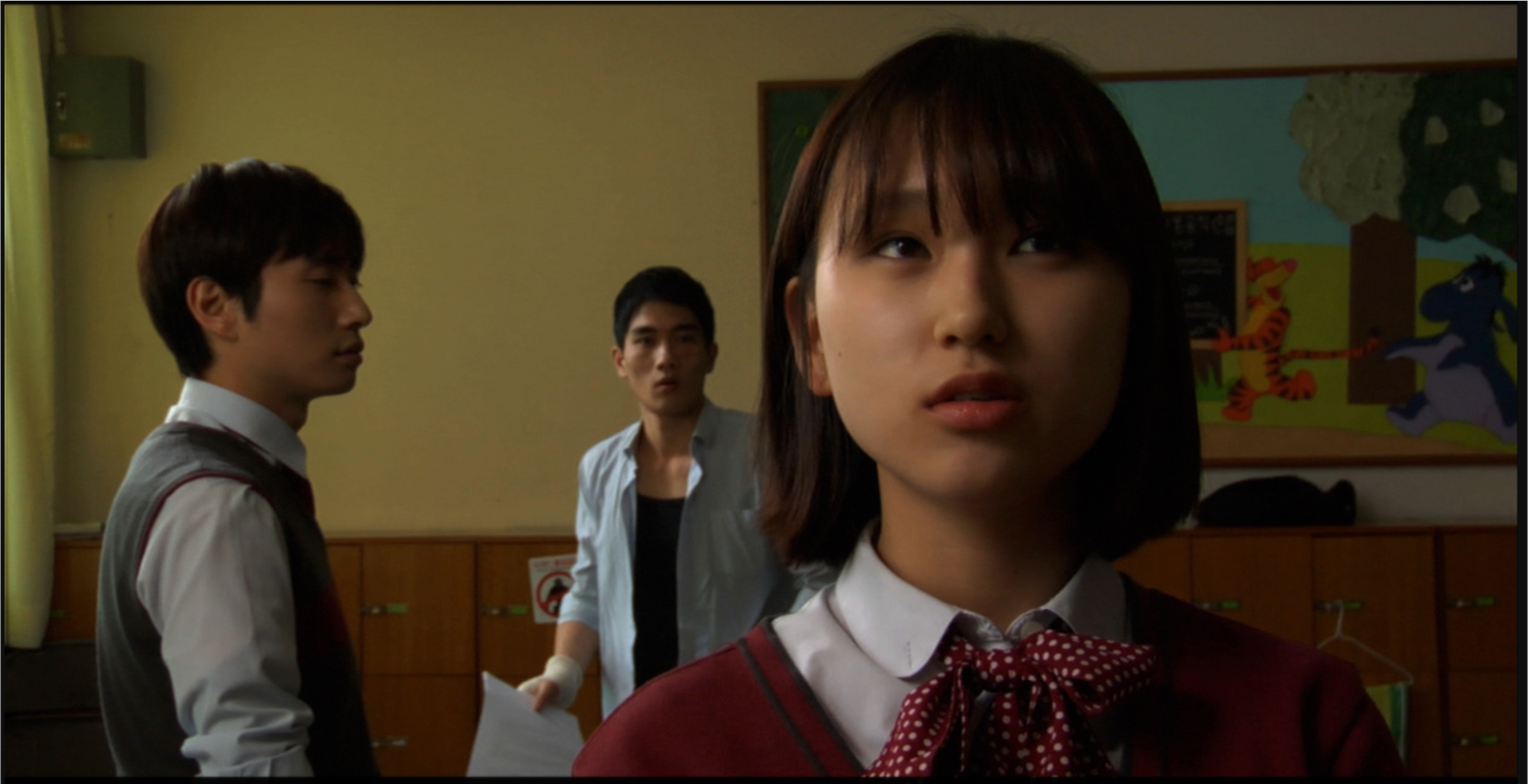
The remembered encounter is unexpectedly ridiculous. In-seok enters the room with another boy, who suddenly pulls down his trousers as a prank. Both discover that Joo-hee is already inside, leaving In-seok scrambling to restore his dignity.
The other boy then approaches Joo-hee and teases her about a letter she has been reading.
It is an amusingly specific memory to revisit during a scene otherwise concerned with romantic disappointment. The embarrassing prank also contributes to the film’s portrayal of In-seok as someone whose attempts to appear composed have been going wrong since adolescence.
Jung seems particularly interested in these small humiliations.
His framing often draws attention to gestures or objects that briefly interrupt the main conversation: a dirty collar, an awkwardly handled drink, a phone vibrating at an inconvenient moment, or the unfinished ice cream left behind after a farewell.
The sound design contributes to the film’s sense of place. Cicadas accompany the summer scenes, sewing machinery establishes the rhythm of the laundry shop, and rain becomes increasingly prominent during the later encounters.
The piano-and-violin theme is used more selectively, most memorably during the opening and closing passages.
Not all of Jung’s choices are equally restrained. The television documentary about mating turtles and the motivational radio narration make their thematic connections rather obvious. They have a slightly heavy-handed quality beside the more carefully observed visual details.
The tonal shifts can also be abrupt. The film moves between tender recollection, broad awkward comedy, sexual tension, and emotional disappointment in ways that occasionally feel uneven.
Still, those contrasting elements give Like a Season a personality of its own. It has the exploratory quality of a graduation film, with a young director trying several ways of expressing the same emotional complications.
The more successful moments tend to be those in which Jung trusts the actors, locations, and physical details to carry the scene.
The Bridge, the Bicycle, and the Things Never Said
The conclusion returns In-seok to the river.
Now an adult, he stands alone on a bridge, looking at the sky and the water below. From there, the film revisits another memory of his school years, when he and Joo-hee walked together along the smaller bridge beneath him.
The visual relationship between the two bridges is especially appealing. The adult In-seok occupies one position while the memory of his younger self unfolds below, turning a familiar location into a meeting point between different periods of his life.
In the recollection, Joo-hee tells him that he is the person who comforts her most.
She then admits that she has someone she likes.
In-seok smiles, apparently entertaining the possibility that she means him. When she asks whether he also likes someone, he becomes visibly excited but cannot quite bring himself to answer.
Instead, he distracts her with a ridiculous observation about water emerging from a drainage opening.
It is such an In-seok response. Faced with an opportunity to say something that might finally clarify his feelings, he makes a joke about something entirely unrelated.
Before he can finish explaining himself, the conversation moves on.
The two eventually continue walking, with In-seok pushing the old bicycle beside Joo-hee. The piano-and-violin melody from the opening returns, accompanying them toward the same uphill road.
Then they disappear from view.
The return to this period of their lives gives the ending a particular sadness. The adult In-seok has already experienced the disappointment of realizing that Joo-hee does not necessarily understand their relationship the way he does. Yet the final image leaves him in a memory from a time when that possibility still seemed open.
There is also a gentle irony in the repetition.
The opening showed two young people enjoying an afternoon together. By the end, the audience has learned enough about their relationship to recognize that the warmth of those moments did not guarantee a shared romantic future.
Joo-hee’s affection was real. She trusted In-seok, found comfort in his company, and clearly valued their friendship. In-seok’s feelings were equally sincere, although he allowed his hopes to shape the meaning of their interactions.
Neither character necessarily experienced the relationship dishonestly. They simply did not understand it in the same way.
The ending does not tell us what becomes of In-seok and Mi-yeon, whether Joo-hee’s circumstances change further, or whether In-seok eventually manages to move beyond his attachment.
Instead, Jung returns to the point at which the possibilities still seem endless to him.
It is a fitting choice for a film titled Like a Season. The summer images, familiar streets, school uniforms, and recurring music all belong to a period that can be remembered but not recovered.
For all its clumsy conversations, unusual humor, and occasional overstatement, the film understands the appeal of revisiting a time when an unfinished confession could still feel like the beginning of something.
Perhaps the bicycle sequences are so affecting because they allow In-seok and Joo-hee to remain exactly as they were, before the consequences of their different expectations became apparent.
They continue up the road together, still comfortable in each other’s company.
In-seok is smiling, and for once he has no particular reason to stop.
The film ends before either of them reaches the top of the hill.