Film Review — Contains Spoilers
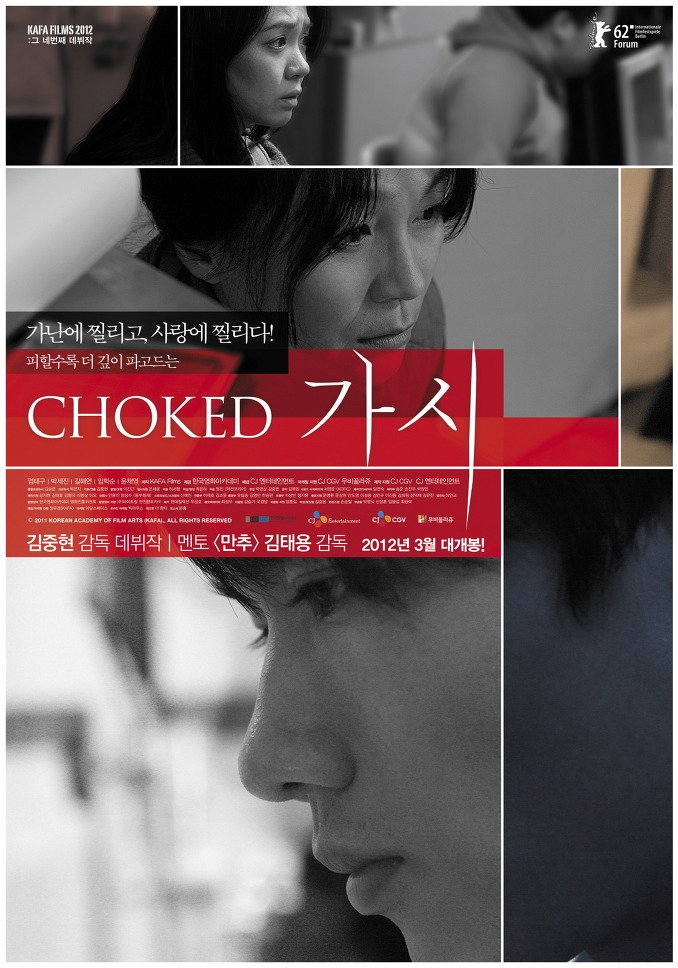
Choked (가시, 2011), directed by Kim Joong-hyun, follows several individuals whose lives become intertwined through debt, family relationships, and their struggles to maintain the lives they had hoped to build. Through Yun-ho (Uhm Tae-goo), Seo-hee (Park Se-jin), and Hee-su (Gil Hae-yeon), the film examines how one person’s decisions can have consequences that extend far beyond their own life.
The film opens with Yun-ho and his girlfriend, Se-kyung (Yoon Chae-young), walking through a snow-covered landscape. During their casual conversation, Se-kyung mentions an acquaintance who is planning to get married. The discussion gradually shifts toward their own relationship, including plans for Yun-ho to meet Se-kyung’s mother.
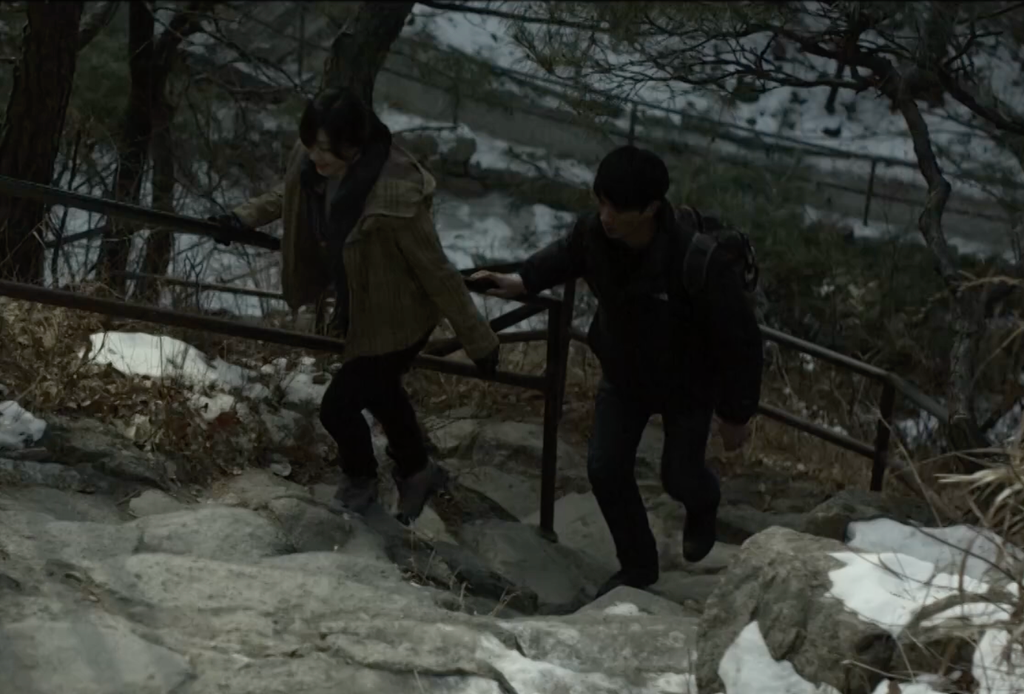
This opening establishes the future Yun-ho hopes to build: a life with someone he loves, marriage, and a home of their own. However, these plans soon collide with unresolved problems within his family.
A Mother’s Debt, a Son’s Burden
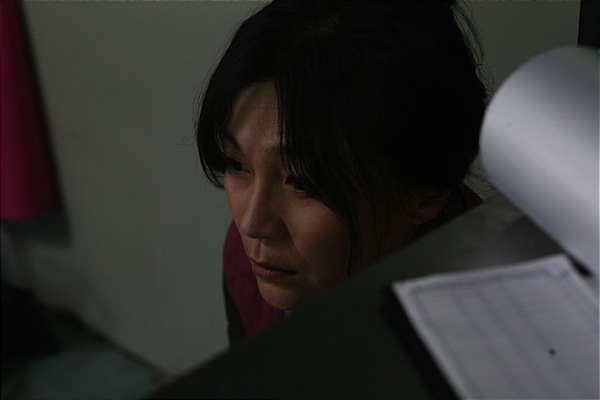
Yun-ho’s mother, Hee-su, is involved in a health supplement business that eventually becomes entangled in financial trouble. Among those who trust her is Seo-hee, a divorced woman who has entrusted 30 million won to Hee-su.
In an early scene, Seo-hee visits Hee-su’s home and notices several boxes of health supplements stacked inside. These boxes are a small but significant detail. To Seo-hee, the presence of actual merchandise may serve as reassurance that Hee-su’s business is legitimate and operating as promised. The film illustrates how easily trust can be established through seemingly convincing appearances, even when the actual condition of a business remains unknown.
When Hee-su disappears and becomes unreachable, Seo-hee repeatedly visits her home, demanding the return of her money. During one visit, she even brings a locksmith to open the door, only to be caught by Yun-ho.
The problem is that Yun-ho is not the person who borrowed the money. Nevertheless, because Hee-su’s whereabouts are unknown, the people demanding repayment begin approaching him instead.
The situation becomes increasingly threatening when a debt collector confronts Yun-ho and pressures him into signing a document. In another scene, Yun-ho contacts several financial institutions in search of a loan, comparing the amounts he might be able to borrow and the interest rates involved. His lack of assets under his own name becomes another obstacle.
The family’s financial troubles also extend to other relatives. Yun-ho’s aunt, Yeon-soo (Choo Kwi-jung), produces records of money she previously lent to Hee-su. Even the house Yun-ho occupies is connected to family assistance rather than complete financial independence.
Through these encounters, the film establishes how little room Yun-ho has to distance himself from his mother’s actions. He must deal with people demanding repayment while simultaneously attempting to support himself and prepare for his own future.
Marriage and the Cost of a Socially Acceptable Life
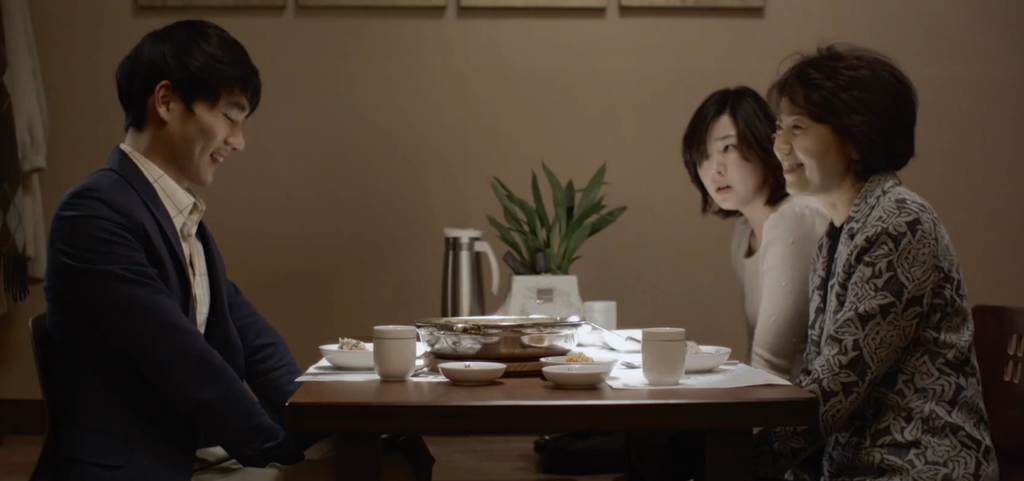
The financial pressure on Yun-ho becomes particularly evident when he encounters Se-kyung’s family.
During a meal together, Se-kyung’s mother acknowledges that Yun-ho appears to be a good man. However, she goes on to explain that good character alone is insufficient for marriage. A stable income and financial security are equally important considerations.
Yun-ho’s changing expression during this conversation is telling. The compliment initially brings a smile to his face, but it quickly fades as the discussion begins to indirectly question his readiness for marriage.
Meanwhile, Se-kyung repeatedly attempts to discuss their future together. She questions why Yun-ho has not introduced her to Hee-su and why he seems reluctant to speak openly about his family.
What makes their relationship increasingly difficult is that Se-kyung does not fully understand the problems Yun-ho is facing. She expects their relationship to progress, while Yun-ho attempts to conceal circumstances that directly affect his ability to marry her.
Their economic differences are also reflected in their living environments. Se-kyung’s apartment appears comfortable and well-equipped, contrasting sharply with Yun-ho’s smaller and more cluttered family home.
When Yun-ho finally takes Se-kyung to see the apartment he has prepared for their married life, her response falls short of his expectations. She considers the apartment too small, and their conversation shifts toward the need for a car. She even mentions Audi as a brand she likes.
The meeting ultimately ends with their relationship falling apart.
The scene is painful not simply because Se-kyung dislikes the apartment Yun-ho has chosen, but because the audience has already witnessed his efforts to secure a loan and find somewhere he can afford.
Nevertheless, Se-kyung should not necessarily be interpreted as an entirely materialistic character. Her lack of knowledge about Yun-ho’s family situation also contributes to their conflict. Yun-ho cannot meet her expectations, but neither does he offer an explanation that would allow her to understand his circumstances.
Their relationship ultimately portrays two people with different expectations who find it increasingly difficult to communicate once financial circumstances begin determining their choices.
Seo-hee: Losing Money, Family, and a Place to Belong
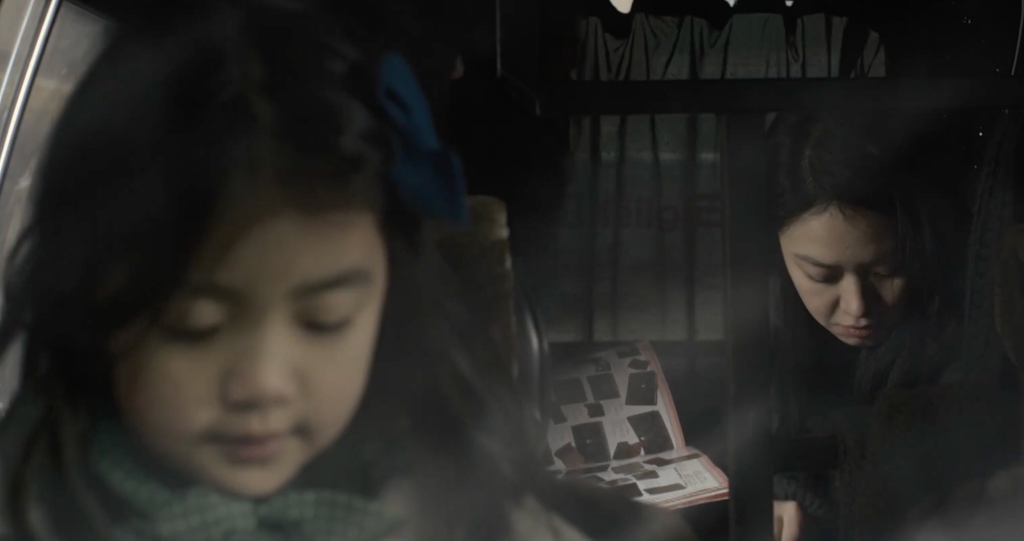
Among the characters in Choked, Seo-hee faces a particularly complicated set of circumstances.
She is divorced from her former husband, Jae-sik (Lim Hak-soon), who now lives with his new wife, Hye-gyeong (Lee Ji-ah), and their daughter, Ji-woo (Yoon Su-ah). Seo-hee’s relationship with Ji-woo is strained, and the girl appears more comfortable with her father’s new family.
Seo-hee’s financial condition deteriorates after losing the money she entrusted to Hee-su. To survive, she uses her aging van to sell counterfeit branded goods. The police eventually discover her activities, including during an incident when Ji-woo is present.
These scenes establish that Seo-hee is more than a fraud victim who repeatedly appears to demand repayment. She is also struggling to maintain an income and preserve her relationship with her daughter, even when her own decisions are questionable.
One of the film’s most heartbreaking scenes occurs when Ji-woo recites an English poem at school.
Inside the classroom, Jae-sik and Hye-gyeong are seated among the parents watching the performance. Seo-hee, meanwhile, observes from outside through a window. She is physically separated from the parents who are present to support their children.
Earlier in the film, Seo-hee had asked Ji-woo to demonstrate her English skills, only to receive a response that revealed the emotional distance between them. Consequently, when Ji-woo finally performs in front of the class, Seo-hee’s absence from the room carries additional significance.
The film does not need an argument to communicate her alienation. Her position outside the window is enough to suggest that she no longer occupies the same place in her daughter’s life.
Seo-hee has also prepared a Nintendo Wii as a gift for Ji-woo, something the girl previously wanted. She later brings the present to the bakery owned by Jae-sik and his new wife.
Her visit creates an uncomfortable atmosphere. When Seo-hee eventually speaks privately with her former husband, she asks him for financial assistance. Jae-sik responds by recalling the circumstances surrounding their divorce: Seo-hee had once said that she felt lonely during their marriage and suffocated by her life with Ji-woo.
This conversation adds another dimension to Seo-hee’s character. Her present loneliness cannot be entirely separated from the decisions and difficulties that existed during her marriage.
The film does not explain the complete history of their relationship. However, their encounter at the bakery suggests that losing her family was not simply something that happened to Seo-hee. Past conflicts and choices also contributed to the circumstances she now faces.
Hee-su and Seo-hee: Betrayal Does Not Erase Compassion
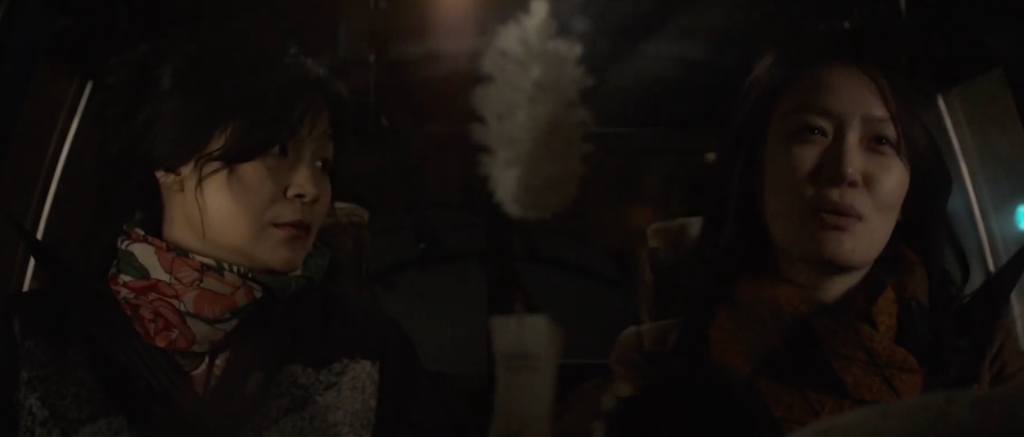
The relationship between Seo-hee and Hee-su is one of the film’s most compelling elements.
Initially, Seo-hee appears to be a woman relentlessly pursuing someone who has caused her substantial financial harm. She visits Hee-su’s home, causes disturbances, and attempts to obtain information from Yun-ho.
However, as the film develops, it becomes apparent that their relationship once involved something more personal than a financial transaction.
One indication appears in a scene where Seo-hee is driving with Yun-ho in the passenger seat. The person beside her suddenly appears to be Hee-su, before the image returns to Yun-ho sleeping in the same seat.
This visual transition can be interpreted as Seo-hee recalling the time when Hee-su was someone she could talk to. Their previous relationship seems to have offered something Seo-hee no longer possessed after her divorce: companionship and someone with whom she could share ordinary experiences.
The contrast between past and present becomes even more apparent when Hee-su is eventually taken into custody.
Upon seeing Hee-su being escorted through a police station corridor in handcuffs, Seo-hee asks the officers for a few minutes to speak with her. Her request is denied.
Instead, Seo-hee gives the officers a bag containing adult diapers and asks them to pass it to Hee-su.
This seemingly minor gesture becomes significant when considered alongside an earlier scene in which Hee-su struggles with urinary incontinence while hiding from the people searching for her.
Seo-hee is aware of Hee-su’s condition and continues to consider her personal needs, despite the considerable harm the woman has caused her.
This does not mean that Seo-hee has forgiven Hee-su’s debt. Rather, it reveals the complexity of their relationship. Seo-hee can be angry, feel betrayed, and desperately need her money returned while still caring about someone who was once close to her.
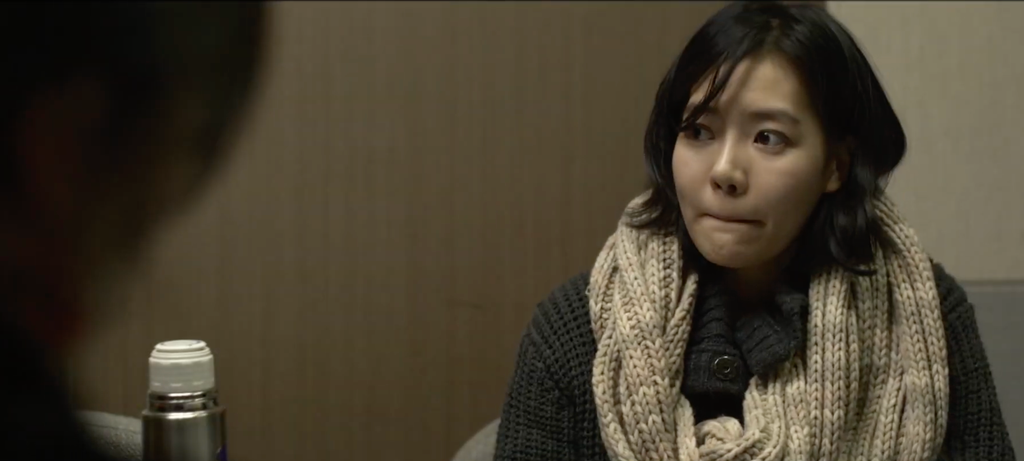
A similar complexity emerges when Hee-su’s daughter and Yun-ho’s younger sister, Yoon-young (Kim Mi-sun), visits her mother in detention.
When Hee-su comments on the food Yoon-young has brought, her daughter responds by reminding her that she never cooked for her in the past. A seemingly ordinary exchange quickly exposes longstanding tension between them.
Hee-su then asks for chocolate and adult diapers. Their conversation eventually develops into an argument about what the mother expects from her children.
Hee-su insists that she has never asked them to secure her release or repay all her debts. Yet her statement contradicts the circumstances the film has already established. Even if Hee-su never explicitly requests their assistance, her children continue to bear the consequences of the problems she has left behind.
The scene portrays someone who still wishes to maintain her dignity and independence as a parent but struggles to fully acknowledge the extent to which her actions have affected her family.
When Yun-ho Changes from Victim to Perpetrator
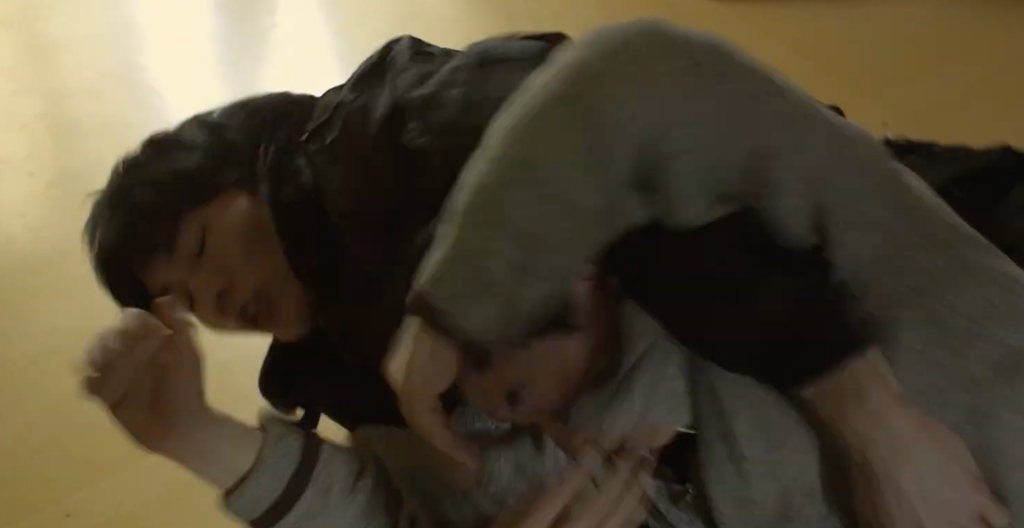
The most significant turning point in Yun-ho’s character development occurs through his work.
Yun-ho is employed in a residential redevelopment project. Part of his responsibilities involves obtaining approval from residents affected by the proposed development. However, one middle-aged male resident continues to refuse his consent.
Yun-ho has repeatedly attempted to persuade him without success.
As the pressure from his work and personal circumstances intensifies, Yun-ho returns to the man’s home. He initially attempts to negotiate, but another refusal causes the situation to escalate into violence.
Yun-ho forces his way inside and becomes involved in a physical struggle with the resident. He then grabs the man’s hand, forcibly presses his thumb against an ink pad, and stamps it onto the consent document he has brought with him.
This scene represents the clearest moral turning point for Yun-ho.
Until this moment, he has repeatedly faced demands to repay debts he did not incur. Now, in an attempt to resolve a problem at work, he imposes his will on someone else.
A resident who has the right to refuse a redevelopment project loses control over his own decision because of Yun-ho’s actions.
As Yun-ho hurriedly leaves the house, the resident’s son arrives and discovers his father collapsed on the floor. Yun-ho flees, even stumbling outside and scattering the documents he has been carrying.
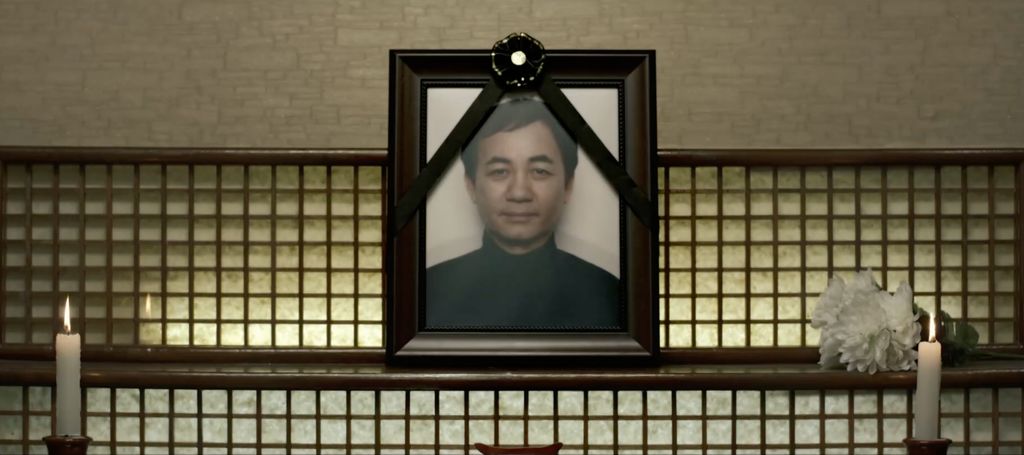
Later, news emerges that the resident has died, with a possible heart attack mentioned in a funeral conversation. The film does not definitively establish a direct causal connection between the man’s death and Yun-ho’s actions. Nevertheless, the sequence clearly leaves Yun-ho psychologically disturbed.
This becomes apparent when Yun-ho later sees the resident’s son walking with a woman who appears to be his mother. Recognizing the boy, Yun-ho lowers his head onto the steering wheel.
Shortly afterward, while driving with his supervisor, Yun-ho loses concentration. He becomes distracted by the turn signal of the vehicle ahead and follows it in the wrong direction.
These two scenes communicate the incident’s psychological impact without requiring an extended confession from Yun-ho. What happened at the resident’s home is no longer simply a workplace problem that ended once the required document was obtained.
The event continues to trouble him, even as his ordinary responsibilities demand his attention.
This is where Choked becomes more interesting than a straightforward story about someone victimized by financial hardship.
The pressure Yun-ho experiences helps explain his growing desperation. However, that pressure does not justify his use of violence.
The film shows how someone who believes he has no choice may make a decision that deprives another person of theirs.
Not Every Relationship Ends After Betrayal
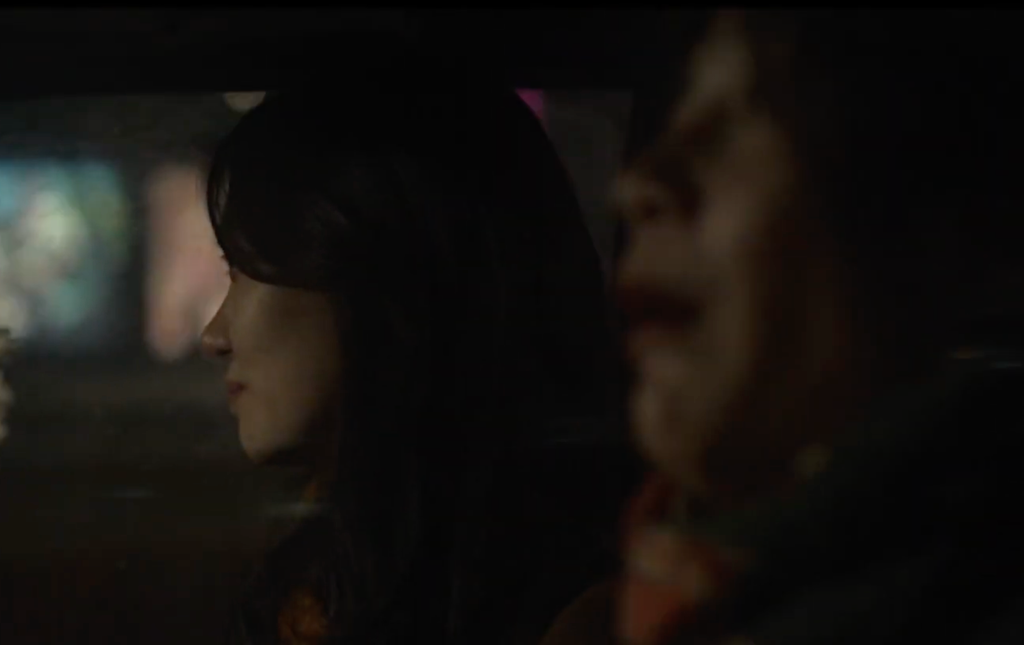
Toward the end of the film, Hee-su is seen leaving the police station with her belongings. An officer follows her outside to return the adult diapers she has left behind.
Shortly afterward, Seo-hee arrives to pick her up in her blue van.
Their reunion is not accompanied by an elaborate apology or a dramatic reconciliation. Instead, Seo-hee immediately returns to the practical question of when Hee-su intends to repay her money.
Hee-su offers no clear solution. She suggests taking over the driving instead, despite not yet having a driver’s license.
The conversation feels almost absurd after everything the two women have experienced.
Seo-hee still needs her money. Hee-su remains unable to fulfill her financial obligations. Yet they are once again sitting together in the same vehicle, speaking and interacting like two people who have known each other for years.
The scene offers no certainty about the future of their relationship. Nevertheless, Seo-hee’s presence suggests that human connections do not always end decisively once trust has been broken.
An Ending Without Relief
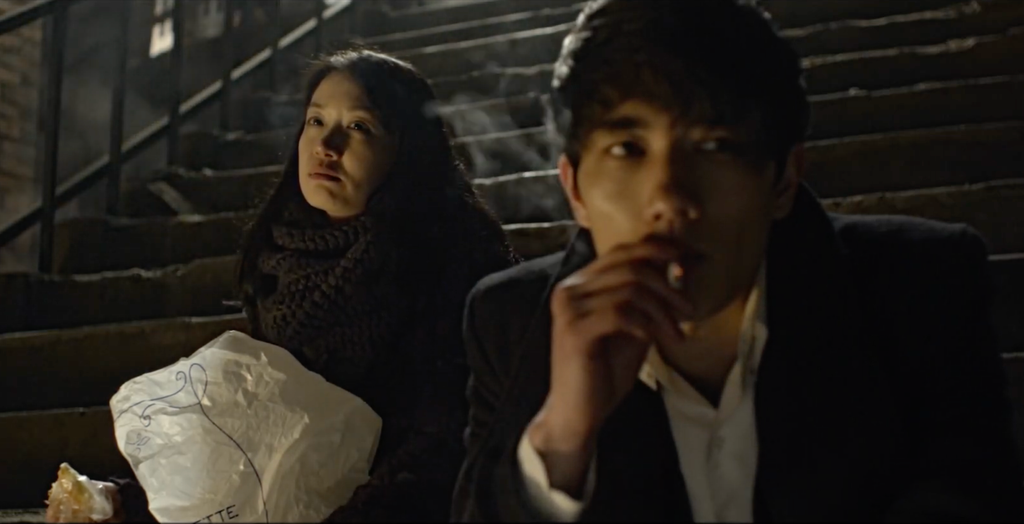
The film concludes with another act of violence, this time directed at Yun-ho.
While descending a staircase, he is suddenly attacked by someone dressed in dark clothing with their face concealed. The attacker repeatedly strikes Yun-ho until he collapses, bleeding from his head.
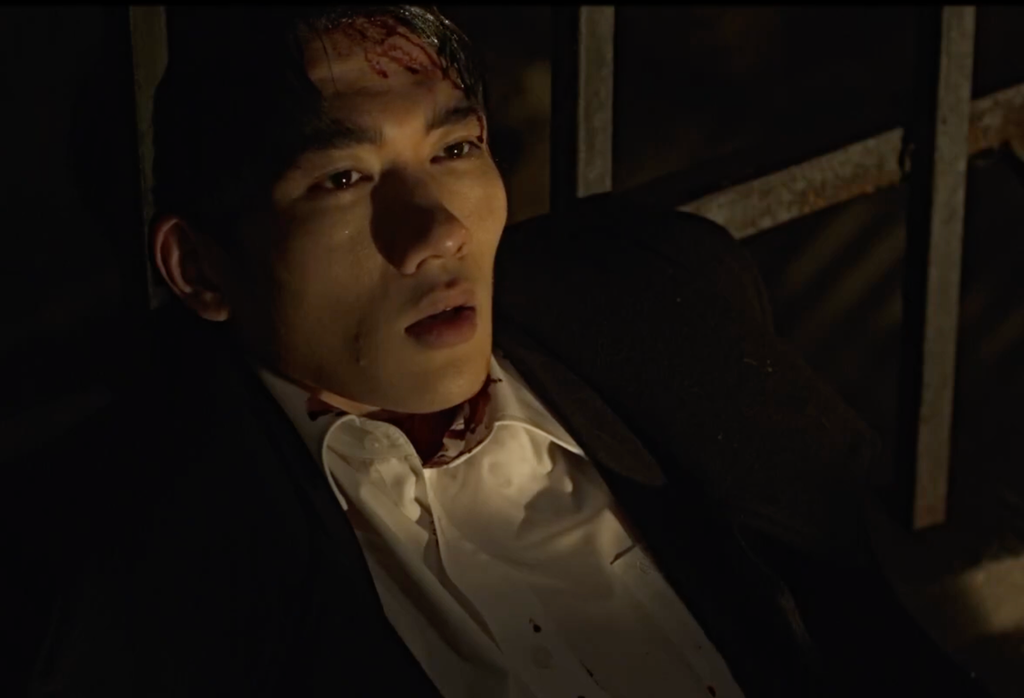
The attacker’s identity is never clearly revealed. Given the earlier events, viewers may associate the figure with the son of the deceased resident. However, the film does not provide sufficient confirmation to establish this interpretation as fact.
The closing sequence also incorporates a scene of Yun-ho and Hee-su together at home, returning to their relationship as mother and son and to problems that were never truly resolved.
When the film returns to Yun-ho lying on the staircase with blood running from his head, he begins to cry, appearing utterly exhausted.
There is no comforting resolution. His financial difficulties, his relationship with his mother, the collapse of his romantic relationship, and the consequences of his own actions receive no neat closure.
What remains is Yun-ho, alone, injured, and seemingly without the strength to continue confronting his circumstances.
Uhm Tae-goo’s Performance as Yun-ho
As one of Uhm Tae-goo’s earlier screen performances, Yun-ho offers an opportunity to observe the actor portraying a character who gradually loses control over his life.
At the beginning of the film, Yun-ho is not immediately presented as an aggressive individual. In his relationship with Se-kyung, he can appear warm, smiling, and willing to discuss plans for their future.
However, as his mother’s financial problems increasingly interfere with his life, he is frequently shown under pressure, avoiding conversations, or struggling to respond to the people around him.
One particularly interesting example occurs during his confrontation with Seo-hee at home. Their physical altercation results in Seo-hee’s clothing being damaged. She then deliberately opens part of her clothing to challenge and humiliate Yun-ho.
Rather than responding with similar aggression, Yun-ho appears awkward and confused. His reaction contrasts sharply with the violence he later directs toward the resident who refuses to sign the redevelopment agreement.
This change in behavior demonstrates that Yun-ho is not initially portrayed as someone who habitually resorts to violence when confronted with difficulties. His actions become increasingly extreme as the pressure surrounding him accumulates.
It is also interesting to observe Tae-goo’s vocal quality in this film. His voice sounds relatively lighter than the deep, husky vocal character that would become more recognizable in his later performances.
However, some of his most notable contributions occur in scenes where Yun-ho says very little: the smile that disappears during the conversation about financial security, his expression of guilt upon seeing the deceased resident’s family, and the restrained tears in the final scene.
These moments allow viewers to observe changes in Yun-ho’s emotional condition without relying entirely on dialogue to explain them.
Conclusion
Choked does not attempt to present Yun-ho as a character who deserves unconditional sympathy. Although he suffers the consequences of his mother’s actions, he also makes decisions that harm others.
Seo-hee experiences financial loss and growing estrangement from her daughter, but the film also reveals family problems that existed long before Hee-su’s betrayal.
Meanwhile, Hee-su, whose actions connect the characters’ conflicts, is not portrayed solely as someone avoiding responsibility. She also has physical vulnerabilities, fears, and a continuing need to receive care from the people she has disappointed.
The strength of Choked lies in the connections between these events. The boxes of supplements that encourage Seo-hee to trust a business, the apartment that fails to meet Se-kyung’s expectations, the Nintendo Wii that cannot restore a mother-daughter relationship, the adult diapers entrusted to someone who has betrayed a friend, and the thumbprint obtained through violence all demonstrate how financial problems influence decisions, relationships, and personal dignity.
The film does subject its characters to an almost relentless succession of misfortunes. Certain developments are also left insufficiently explained, requiring viewers to piece together events and motivations themselves. Nevertheless, this approach leaves room to examine the conflicts from multiple perspectives.
Its Korean title, 가시 (Gasi), means thorn, while its international title, Choked, evokes the sensation of being suffocated or unable to breathe.
Both titles seem appropriate for the lives of its characters. They continually attempt to improve their circumstances, yet each decision threatens to introduce another source of suffering.
Ultimately, Choked is not merely a story about people trapped in debt. It is also an examination of how attempts at self-preservation can harm others, and how affection, anger, and responsibility remain intertwined even after relationships have been damaged.